
Brachial plexus injury at birth? Get answers about what happened.
Most families never learn whether a birth injury could have been prevented. We get the records, have independent specialists review them, and tell you what they show. Free case review, no fee unless we win, and a real person answers 24/7.











Get your free case evaluation
Three fields. We call or text you back within the hour.
Do these four things now
The first few days decide a lot of cases. In order:
What you can get paid for
A birth injury claim looks at your child's whole life, not only the first year.
Find out what your case is worthDeadlines vary. Act early.
How long you have depends on the type of case and who is responsible. Some claims, such as those against a government agency, have deadlines measured in months, not years. Call early, and we find the deadline that applies to you.
Birth injury questions we get every day
Straight answers. No fine print.
How do we know if the injury could have been prevented?
Is there a deadline for a child's case?
How much do you charge?
Birth injury cases in nine states
Staffed offices in Irvine, Chicago and Las Vegas, and satellite offices by appointment. We also come to you.
More about brachial plexus injury
Read the full guide

Brachial plexus injury, also known as brachial plexus birth injury, occurs in one to three of every 1,000 births. In most cases, this injury is caused when an infant's neck, or brachial plexus (BRAY-key-el PLEK-sis) area, is stretched during a difficult delivery. The result is often a loss of muscle function or paralysis of the upper arm. This injury may be referred to as brachial plexus birth palsy or neonatal brachial plexus palsy.
ANATOMY
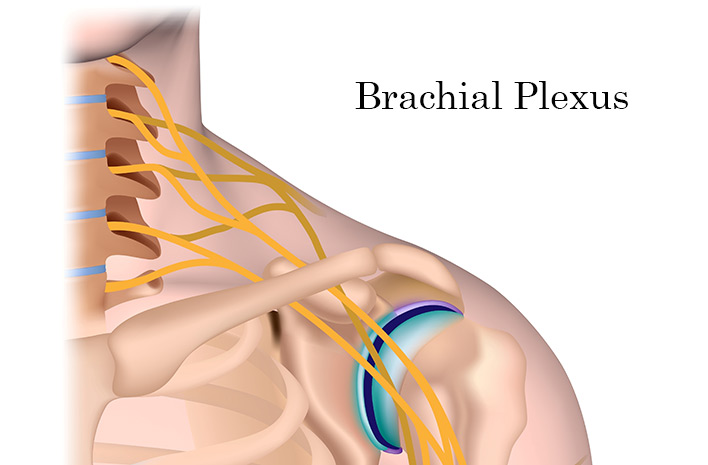
The brachial plexus is a network of nerves around the neck and shoulder. This part of the peripheral nervous system (that is, outside the brain and spinal cord) connects the spinal cord to the arms. It includes the last four cervical spinal nerves (C5 through C8), and the first thoracic spinal nerve (T1). These peripheral nerves pass from the neck bones (vertebrae), and along the side of the neck and collarbone (clavicle), to control all muscle function and feeling in the chest and upper extremities (shoulder, arms, hands, and fingers).
CAUSES OF INJURY
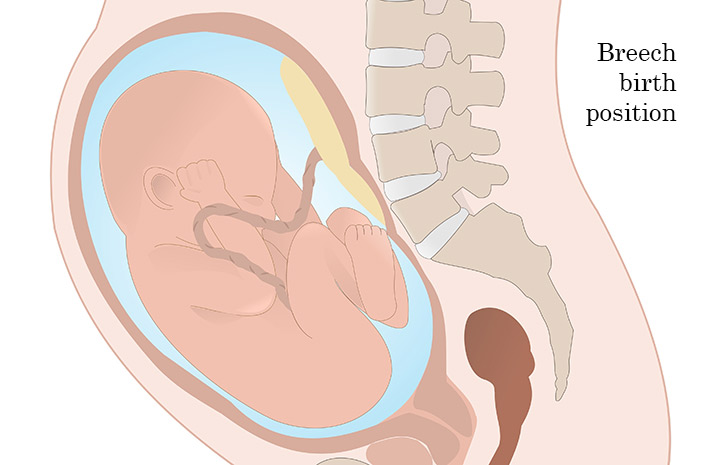
If the nerves of the brachial plexus are stretched, compressed, or torn, a loss of movement or weakness (‘palsy”) of the arm may occur. With infants, this occurs when the head and neck is pulled toward one side as the shoulders pass through the birth canal. This neonatal nerve injury is most commonly an outcome of difficult deliveries, such as:
- A breech birth (the baby is born feet-first)
- A prolonged labor
- An extremely large baby (such as an infant of a mother who is obese or has gestational diabetes)
- A birth complication in which the person assisting with delivery must pull the baby from the birth canal
- When the baby’s shoulders become lodged in the birth canal (shoulder dystocia)
Regular prenatal care can help to prevent brachial plexus injuries by reducing complications during birth. Although a Caesarean section reduces the risk of injury, it does not fully prevent it. C-sections also carry other risks.
TYPES OF BRACHIAL PLEXUS INJURIES
All peripheral nerve injuries impact the brain’s ability to communicate to parts of the body. The four basic types of brachial plexus injuries all involve a loss of feeling and partial/complete paralysis. However, the treatment decisions and extent of recovery possible depend on the severity of the injury.
Neurapraxia (stretch injury)
The stretch injury is the most common type of nerve injury. Neurapraxia (new-rah-PRAK-see-ah) is an injury that occurs outside the spinal cord, which traumatizes, but does not tear the nerve. It can happen in adults, as well, most often due to motor vehicle accidents. Neurapraxia normally heals on its own within three months or so.
Neuroma
When a stretch injury damages nerve fiber, the resulting scar tissue on the injured nerve may press on the remaining healthy nerve. This condition is called a "neuroma,” and may require surgical nerve reconstruction and/or secondary tendon transfers.
Rupture
A rupture is a tear in the nerve that happens outside the spinal cord. A rupture typically requires surgery, such as a nerve graft (see below).
Avulsion
An avulsion happens when the nerve root is torn from the spinal cord. It is not possible to repair an avulsion, but it may be possible to restore some function in the arm through nerve transfer surgery (see below). This injury is less common, occurring in 10-20 percent of cases.
RESULTING CONDITIONS OF THESE INJURIES
There are several different conditions that may arise from a brachial plexus injury, including:
Erb’s Palsy
Most cases of brachial plexus birth injury involve the upper nerves in the brachial plexus. This is known as Erb's Palsy. The result is weakness in the shoulder and upper arm. The infant may not be able to move the shoulder but may be able to move the fingers.
Global Palsy
20 to 30 percent of brachial plexus birth injuries involve both upper and lower brachial plexus nerves. Children with global or total plexus injuries may be unable to move any muscles in the affected arm, from the shoulder down.
Horner’s syndrome
This is a more severe injury of the brachial plexus, usually associated with an avulsion, and occurs in 10 to 20 percent of brachial plexus injuries. The child may have drooping eyelid (ptosis), a smaller pupil in one eye (miosis) and/or diminished sweat production in part of the face (anhydrosis).
Klumpke’s Paralysis/Palsy
This seldom occurs in babies or children. It involves the lower part of the brachial plexus, and typically affects the muscles of the hand.
SYMPTOMS OF BRACHIAL PLEXUS INJURIES
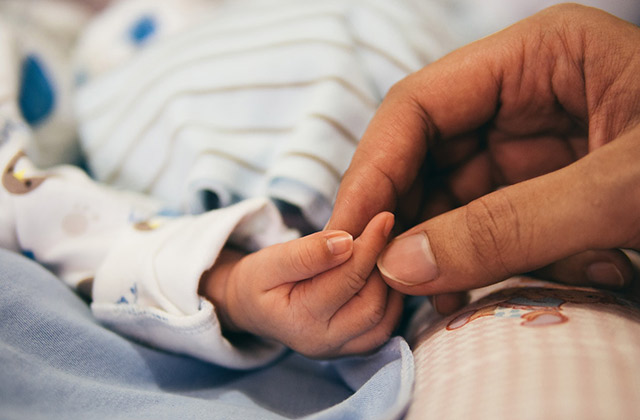
- Weakness or decreased grip in one arm
- Loss of movement or sensation in the arm
- One arm bends toward the body stiffly
One arm hangs limp - Pain in the affected arm or shoulder
A condition called pseudoparalysis sometimes presents the same symptoms. Pseudoparalysis occurs when there is a fractured bone in the arm, neck, hand, or shoulder, but no nerve damage. In this case, the infant is not moving the arm because of pain.
A pediatrician will usually make a brachial plexus injury diagnosis based on a physical examination. Your doctor may order an x-ray, ultrasound, or other imaging tests, such as an electromyogram (EMG) or a nerve conduction study (NCS), or an MRI (magnetic resonance imaging).
TREATMENT
Most newborns with brachial plexus birth injuries recover on their own, but your doctor may recommend treatment that can help your child recover functionality more quickly and/or completely.
Nonsurgical Treatment
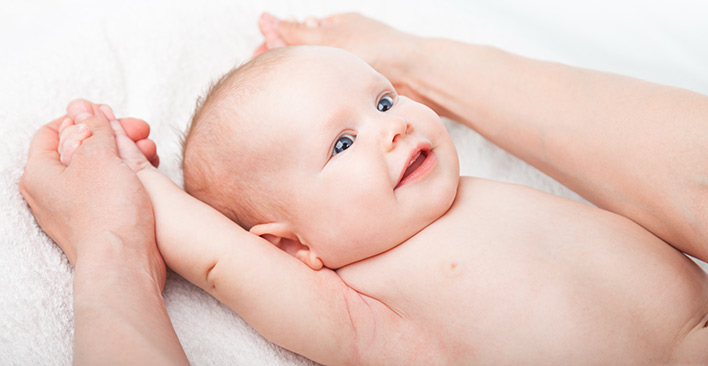
For stretch injuries, physical therapy will be the primary treatment. Starting when the baby is about three weeks old, a doctor or physical therapist will teach parents exercises they can do with the baby to increase the range of motion in the shoulder, elbow, wrist, and hand.
Surgical Treatment
If there is no change over three to six months, your doctor may suggest surgery. This may be:
- Nerve graft: Repairs a rupture by "splicing" a graft with another nerve of the same child.
- Nerve transfer: Uses a nerve from another muscle as a “donor”; the donor muscle may lose some function.
Post-surgical treatment usually includes ongoing physical therapy. Because nerves grow and recover slowly, complete recovery may take up to two years. It is also possible that nerve surgery will not restore full function, and your child may continue to have some weakness in the affected arm or hand. Major damage may result in full paralysis of the arm.
If your child has experienced a brachial plexus birth injury, you need support to ensure your child receives the best treatment available. If you’re not receiving that support from your insurance company, or the medical institution responsible for your child’s injury, contact TorkLaw today. You may be owed significant compensation, and if you are, TorkLaw’s experienced personal injury attorneys will make sure you and your child receive it.
Fill out the form on this page or call us at 888-845-9696.
Not sure if you have a case? Call anyway. It's free to ask.
Someone answers 24/7. English and Spanish. No obligation.

New clients 888.845.9696Existing clients 888.222.8286
This is a paid advertisement for TORKLAW, not an offer or guarantee of results. Every case is different and must be evaluated on its own merits. Some matters may be referred to partner firms as appropriate. Contacting us does not create an attorney-client relationship. Tracy R. Horn, Esq. is responsible for this advertisement. Main Office: 18650 MacArthur Blvd, Suite 300, Irvine, CA 92612.