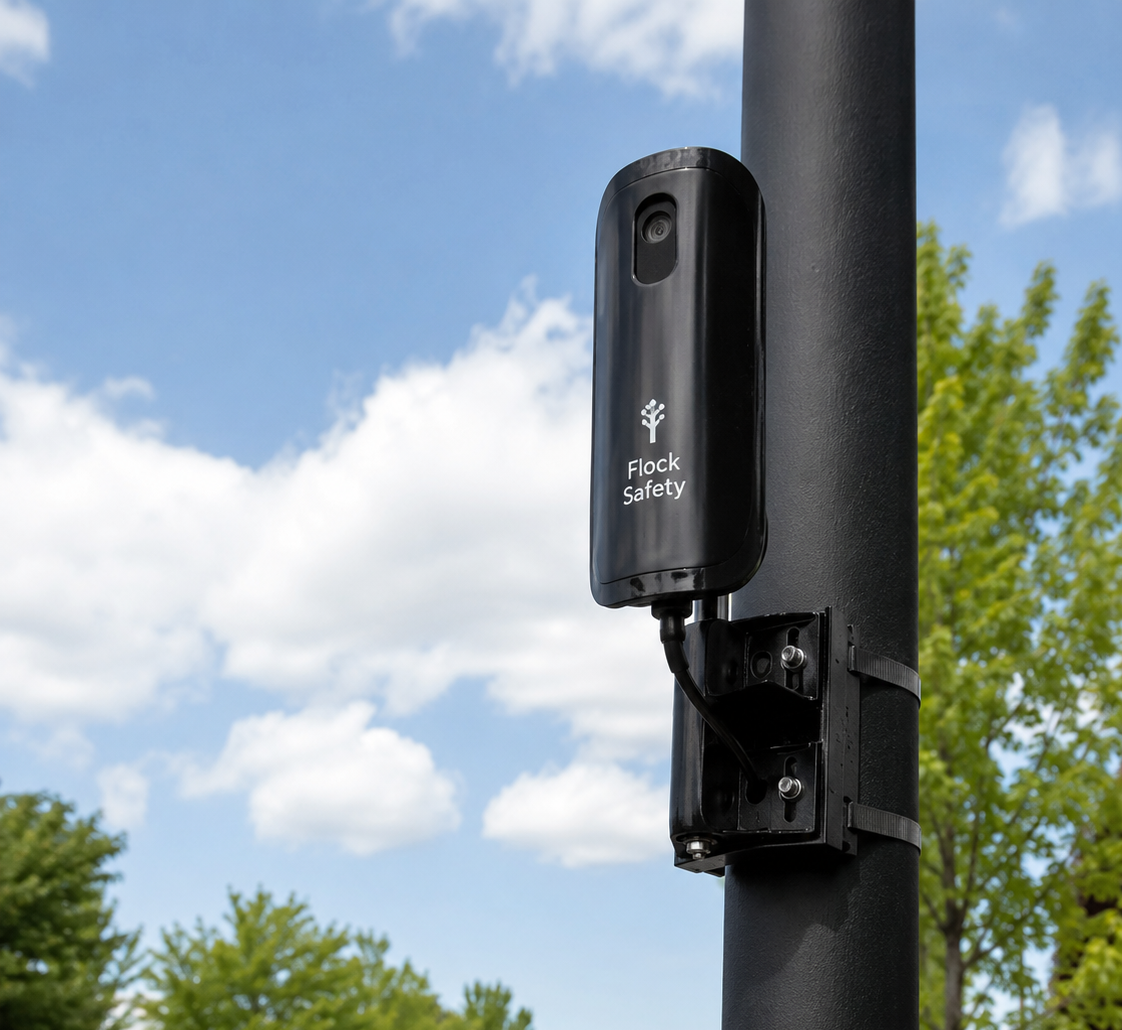
Flock Safety cameras are becoming an increasingly common sight in cities and neighborhoods across the United States.
Mounted on utility poles and along roadways, these automated license plate reader (ALPR) cameras capture license plate numbers and vehicle characteristics to assist law enforcement with investigations, locating stolen vehicles, and identifying vehicles associated with reported crimes.
As more communities adopt the technology, public discussion has grown.
Supporters say Flock cameras can improve public safety by providing law enforcement and emergency responders with timely information that may help investigations and response efforts. Others have raised questions about privacy, data collection, government surveillance, and how the information is stored and used.
One of Flock Safety’s key claims is that its technology can help save lives by reducing crash response times. At the same time, some residents and privacy advocates have questioned the extent of these benefits and called for greater oversight.
So, what does the available evidence say about the effectiveness of Flock cameras and the concerns surrounding their use?
What Are Flock Cameras?
Flock cameras are automated license plate reader (ALPR) cameras designed to help law enforcement identify vehicles that may be connected to criminal investigations, locate stolen vehicles, assist in finding missing persons, and support emergency response efforts.
To do this, the cameras capture information about passing vehicles, including:
- License plate numbers to help identify specific vehicles.
- Vehicle make, model, color, and other visible characteristics that can help investigators identify a vehicle even when a license plate is missing, obscured, or unreadable.
Authorized law enforcement agencies can search this information as part of criminal investigations or to respond to alerts for vehicles associated with crimes, stolen vehicles, or missing persons.
According to Flock Safety, the company’s systems are designed with several privacy features, including:
- No facial recognition: The cameras are designed to capture license plates and visible vehicle characteristics, not identify or recognize the people inside a vehicle.
- Limited data retention: Vehicle data is generally stored for up to 30 days and is automatically deleted unless it is preserved as part of an active law enforcement investigation or required by law.
Flock’s Claim: Faster Response Saves Lives
Flock Safety argues that every minute counts after a serious vehicle crash. In its report, Every Second Counts: How Faster Crash Response Saves Lives, the company states that reducing the time between a collision and emergency response can improve survival rates by helping first responders reach victims sooner.
According to Flock Safety, its technology can:
- Help identify the location of a crash more quickly.
- Assist dispatchers when callers cannot provide an exact location.
- Reduce delays in notifying emergency responders.
- Improve coordination between law enforcement, firefighters, and emergency medical personnel.
The underlying concept is supported by emergency medicine research, which has long recognized that faster medical treatment after a traumatic injury can improve patient outcomes.
However, determining whether Flock cameras alone are responsible for improved emergency response or survival rates is more challenging. Many factors, including dispatch systems, staffing levels, traffic conditions, and local emergency response protocols, can also influence response times and patient outcomes.
What Does the Data Show?
Flock Safety has published statistics describing the technology’s impact based on surveys of hundreds of participating law enforcement agencies.
According to the company’s 2025 Impact Census:
- Flock technology supported more than 1 million criminal investigations and incidents.
- Agencies estimated that about 20% of cleared criminal cases involved assistance from Flock technology.
- More than 10,000 missing persons were located with the help of Flock systems.
- Many participating agencies reported recovering significant numbers of stolen vehicles using the technology.
These findings suggest that many law enforcement agencies view Flock cameras as a useful investigative tool.
However, it’s important to note that these statistics come from surveys conducted by Flock Safety using responses from its own customers. While the company outlines its methodology and references FBI crime data, independent, peer-reviewed research evaluating the technology’s effect on crash survival rates or overall crime reduction remains limited.
For that reason, some experts caution against drawing a direct cause-and-effect connection between the installation of Flock cameras and broader public safety outcomes.
Growing Public Concerns
As more communities adopt Flock cameras, concerns about privacy and data collection have also increased.
Critics have raised questions about:
- Long-term collection of vehicle location data.
- Potential government surveillance.
- How license plate data is accessed, stored, and shared.
Flock Safety disputes these concerns, stating that:
- Customer agencies control access to their own data.
- All searches are logged for auditing.
- The cameras do not use facial recognition technology or continuously track drivers.
The debate continues as communities weigh the potential public safety benefits against privacy and oversight concerns.
Communities Are Asking More Questions
Public response to Flock cameras has varied from one community to another.
Some cities have expanded their programs after reporting successes in investigations involving:
- Stolen vehicles
- Missing persons
- Violent crimes
Other communities have reconsidered or removed the cameras following concerns about:
- Privacy
- Transparency
- Data oversight
- Program costs
For example, a town in Connecticut voted to discontinue its Flock camera program after officials determined the benefits did not justify the costs and ongoing privacy concerns. Similar discussions in Texas have focused on how license plate data is collected, stored, and shared.
Do Flock Cameras Improve Emergency Response?
The available evidence suggests they may help support emergency response, but the overall impact is still being evaluated.
Flock cameras can provide dispatchers and first responders with location information that may help identify crash scenes more quickly and improve coordination during emergencies.
At the same time, measuring the technology’s direct effect on survival rates or other emergency outcomes is complex. Response times and patient outcomes are influenced by many factors, including:
- Emergency staffing
- Dispatch procedures
- Traffic and roadway conditions
- Local emergency response systems
While Flock Safety and participating agencies have reported positive results, independent, long-term research examining the technology’s broader impact on public safety remains limited.
Finding the Balance
Flock cameras remain the subject of ongoing debate. Supporters view the technology as a valuable tool for helping law enforcement investigate crimes, recover stolen vehicles, locate missing persons, and support emergency response. Critics have raised concerns about privacy, data collection, and government oversight.
As more communities adopt or reconsider automated license plate reader systems, the conversation is likely to evolve alongside new research, real-world experience, and public policy. Ultimately, decisions about Flock cameras will depend not only on whether they improve public safety, but also on whether communities are confident that appropriate safeguards, transparency, and accountability are in place.
What Flock Cameras Could Mean For Personal Injury Cases?
As automated license plate reader technology becomes more common, questions about its role in personal injury cases may become increasingly important. In addition to helping law enforcement investigate crimes, license plate reader data and vehicle images may play a larger role in identifying vehicles involved in vehicle collisions, preserving evidence, and helping investigators reconstruct the events surrounding an accident.
At TORKLAW, we continue to monitor how emerging technologies may affect injury claims and the rights of those involved. As the use of systems like Flock expands, it will be important to see how they influence both public safety and the collection of evidence in future personal injury cases.